Project Context
An environmental remediation team preparing recommendations, budget ranges and client-facing material for an industrial site.
Case
An anonymous scenario around soil-report parsing, route comparison and early-stage client reporting
Built around a 96-page report pack, 3 remediation routes and 1 client summary bundle for early-stage review.
An environmental remediation team preparing recommendations, budget ranges and client-facing material for an industrial site.
Report parsing
96 pages -> 1 structured brief
Testing results, constraints and target standards become one reusable input set.
Route comparison
3 routes side by side
Different remediation options can be compared in the same review context.
Client reporting
1 review bundle
Fewer handoffs are needed between technical reading and client-ready material.
These markers come from an anonymous remediation workflow and show how report parsing, route comparison and client reporting are structured together.
Report pack
96 pages
Includes testing tables, appendices, constraints and target standards.
Routes compared
3 remediation paths
Cost range, risk and suitability are reviewed side by side in the same governed path.
Client package
1 summary bundle
Recommendations, budget ranges and constraints are assembled into one reviewable briefing pack.
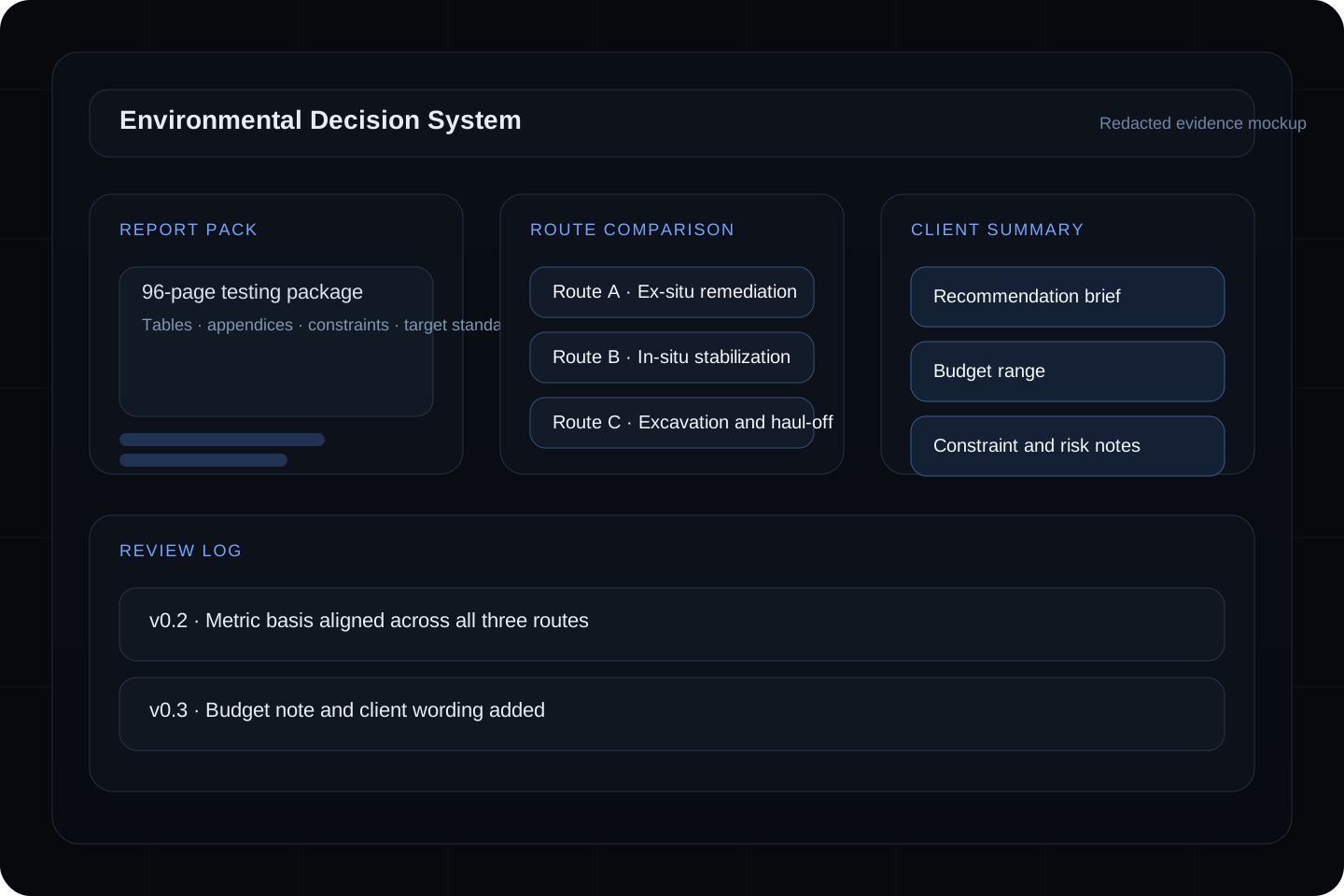
Redacted workflow snapshot
A static view of how report parsing, route comparison and client-facing material are organized in one governed path.
Input set
Testing report pack
Constraint register
Target standard
Comparison set
Output bundle
Revision ledger
If your team needs faster report interpretation, route comparison or early-stage reporting, start with one real report sample.